NEET Morphology of Flowering Plants previous year questions
62 questions on Morphology of Flowering Plants from 18 NEET and AIPMT papers, 2014 to 2026, newest first; on average 3.4 a paper. Open a question for NTA's official answer.
Answers are NTA's official final key, shown for NEET 2021, NEET 2022, NEET 2023, NEET 2023 (Manipur), NEET 2025 and NEET 2026 Re-Examination (21 June). The other papers are given without answers until NTA's key for them is in hand; we do not put an answer of our own in its place. The questions are from published copies of each paper, not from NTA's own booklets, so a word here and there may differ from the printed paper. Chapter-wise weightage
NEET 2026 Re-Examination (21 June)
NTA's answer
Answer: (2) leaves
From NTA's final answer key for NEET 2026 Re-Examination (21 June).
| List I | List II | ||
|---|---|---|---|
| i. | Marginal placentation | a. | Argemone |
| ii. | Axile placentation | b. | Tomato |
| iii. | Parietal placentation | c. | Primrose |
| iv. | Free central placentation | d. | Pea |
NTA's answer
Answer: (1) i - d, ii - b, iii - a, iv - c
From NTA's final answer key for NEET 2026 Re-Examination (21 June).
i. Flowers are bisexual and actinomorphic
ii. Calyx have five sepals and are united
iii. Androecium have five stamens and are epipetalous
iv. Ovary is inferior
Choose the correct answer from the options given below:
NTA's answer
Answer: (2) (i), (ii) and (iii) only
From NTA's final answer key for NEET 2026 Re-Examination (21 June).
NEET 2026 (3 May)
| List I (Placentation) | List II (Example) | ||
|---|---|---|---|
| i. | Marginal | a. | Mustard |
| ii. | Axile | b. | Pea |
| iii. | Parietal | c. | Marigold |
| iv. | Basal | d. | Lemon |
Answer
NTA's official answer key for NEET 2026 (3 May) is not in hand yet. This page will carry the answer when it is; we do not put an answer of our own in its place.
Answer
NTA's official answer key for NEET 2026 (3 May) is not in hand yet. This page will carry the answer when it is; we do not put an answer of our own in its place.
Answer
NTA's official answer key for NEET 2026 (3 May) is not in hand yet. This page will carry the answer when it is; we do not put an answer of our own in its place.
Answer
NTA's official answer key for NEET 2026 (3 May) is not in hand yet. This page will carry the answer when it is; we do not put an answer of our own in its place.
NEET 2025
NTA's answer
Answer: (1) Pea
From NTA's final answer key for NEET 2025.
Statement I: In a floral formula ⊕ stands for zygomorphic nature of the flower, and G̲ stands for inferior ovary.
Statement II: In a floral formula ⊕ stands for actinomorphic nature of the flower and G̲ stands for superior ovary.
In the light of the above statements, choose the correct answer from the options given below:
NTA's answer
Answer: (2) Statement I is incorrect but Statement II is correct
From NTA's final answer key for NEET 2025.
NTA's answer
Answer: (2) Aleurone layer
From NTA's final answer key for NEET 2025.
| List I | List II | ||
|---|---|---|---|
| i. | Scutellum | a. | Persistent nucellus |
| ii. | Non-albuminous seed | b. | Cotyledon of Monocot seed |
| iii. | Epiblast | c. | Groundnut |
| iv. | Perisperm | d. | Rudimentary cotyledon |
NTA's answer
Answer: (3) i-b, ii-c, iii-d, iv-a
From NTA's final answer key for NEET 2025.
NEET 2024
Answer
NTA's official answer key for NEET 2024 is not in hand yet. This page will carry the answer when it is; we do not put an answer of our own in its place.
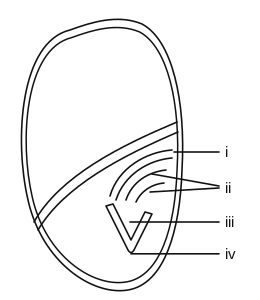
Answer
NTA's official answer key for NEET 2024 is not in hand yet. This page will carry the answer when it is; we do not put an answer of our own in its place.
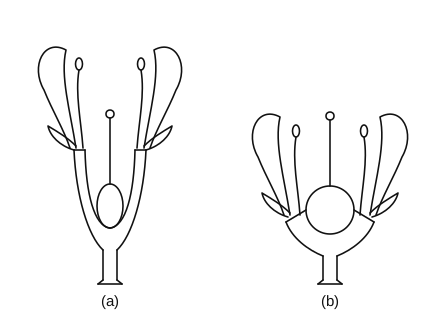
Answer
NTA's official answer key for NEET 2024 is not in hand yet. This page will carry the answer when it is; we do not put an answer of our own in its place.
| List I (Types of Stamens) | List II (Example) | ||
|---|---|---|---|
| i. | Monoadelphous | a. | Citrus |
| ii. | Diadelphous | b. | Pea |
| iii. | Polyadelphous | c. | Lily |
| iv. | Epiphyllous | d. | China-rose |
Answer
NTA's official answer key for NEET 2024 is not in hand yet. This page will carry the answer when it is; we do not put an answer of our own in its place.
| List I | List II | ||
|---|---|---|---|
| i. | Rose | a. | Twisted aestivation |
| ii. | Pea | b. | Perigynous flower |
| iii. | Cotton | c. | Drupe |
| iv. | Mango | d. | Marginal placentation |
Answer
NTA's official answer key for NEET 2024 is not in hand yet. This page will carry the answer when it is; we do not put an answer of our own in its place.
NEET 2023 (Manipur)
NTA's answer
Answer: (3) Valvate
From NTA's final answer key for NEET 2023 (Manipur).
NTA's answer
Answer: (2) Standard, Wings and Keel
From NTA's final answer key for NEET 2023 (Manipur).
| Type of flower | Example | ||
|---|---|---|---|
| i. | Zygomorphic | a. | Mustard |
| ii. | Hypogynous | b. | Plum |
| iii. | Perigynous | c. | Cassia |
| iv. | Epigynous | d. | Cucumber |
NTA's answer
Answer: (2) i – c, ii – a, iii – b, iv – d
From NTA's final answer key for NEET 2023 (Manipur).
NEET 2023
NTA's answer
Answer: (4) Diadelphous and Dithecous anthers
From NTA's final answer key for NEET 2023.
NTA's answer
Answer: (3) China rose, Petunia and Lemon
From NTA's final answer key for NEET 2023.
Assertion A: A flower is defined as modified shoot wherein the shoot apical meristem changes to floral meristem.
Reason R: Internode of the shoot gets condensed to produce different floral appendages laterally at successive node instead of leaves.
In the light of the above statements, choose the CORRECT answer from the options given below:
NTA's answer
Answer: (4) Both A and R are true and R is the CORRECT explanation of A.
From NTA's final answer key for NEET 2023.
NEET 2022
NTA's answer
Answer: (4) Pisum sativum
From NTA's final answer key for NEET 2022.
i. The leaflets are modified into pointed hard thorns in Citrus and Bougainvillea.
ii. Axillary buds form slender and spirally coiled tendrils in cucumber and pumpkin.
iii. Stem is flattened and fleshy in Opuntia and modified to perform the function of leaves
iv. Rhizophora shows vertically upward growing roots that help to get oxygen for respiration
v. Subaerially growing stems in grasses and strawberry help in vegetative propagation
Choose the correct answer from the options given below:
NTA's answer
Answer: (1) ii, iii, iv and v only
From NTA's final answer key for NEET 2022.
i. Mustard
ii. Gulmohar
iii. Cassia
iv. Datura
v. Chilly
Choose the correct answer from the options given below:
NTA's answer
Answer: (4) ii, iii only
From NTA's final answer key for NEET 2022.
NEET 2021
NTA's answer
Answer: (4) Pea
From NTA's final answer key for NEET 2021.
| Column - I | Column - II | ||
|---|---|---|---|
| a. | % ⚥ K(5) C1 + 2 + (2) A(9) + 1 G̲1 | i. | Brassicaceae |
| b. | ⊕ ⚥ K(5) C(5) A5 G̲(2) | ii. | Liliaceae |
| c. | ⊕ ⚥ P(3+3) A3+3 G̲(3) | iii. | Fabaceae |
| d. | ⊕ ⚥ K2+2 C4A2 – 4 G̲(2) | iv. | Solanaceae |
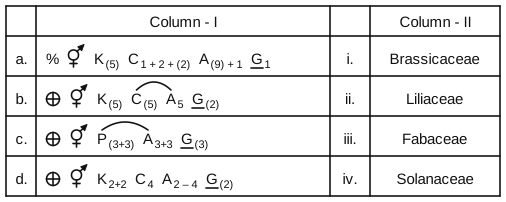
NTA's answer
Answer: (2) (a) - (ii), (b) - (iii), (c) - (iv), (d) - (i)
From NTA's final answer key for NEET 2021.
NEET 2020
Answer
NTA's official answer key for NEET 2020 is not in hand yet. This page will carry the answer when it is; we do not put an answer of our own in its place.
Answer
NTA's official answer key for NEET 2020 is not in hand yet. This page will carry the answer when it is; we do not put an answer of our own in its place.
Answer
NTA's official answer key for NEET 2020 is not in hand yet. This page will carry the answer when it is; we do not put an answer of our own in its place.
NEET 2019 (Odisha)
Answer
NTA's official answer key for NEET 2019 (Odisha) is not in hand yet. This page will carry the answer when it is; we do not put an answer of our own in its place.
| Column-I | Column-II | ||
|---|---|---|---|
| i. | Basal | p. | Mustard |
| ii. | Axile | q. | China rose |
| iii. | Parietal | r. | Dianthus |
| iv. | Free central | s. | Sunflower |
Answer
NTA's official answer key for NEET 2019 (Odisha) is not in hand yet. This page will carry the answer when it is; we do not put an answer of our own in its place.
Answer
NTA's official answer key for NEET 2019 (Odisha) is not in hand yet. This page will carry the answer when it is; we do not put an answer of our own in its place.
NEET 2019
Answer
NTA's official answer key for NEET 2019 is not in hand yet. This page will carry the answer when it is; we do not put an answer of our own in its place.
NEET 2018
Answer
NTA's official answer key for NEET 2018 is not in hand yet. This page will carry the answer when it is; we do not put an answer of our own in its place.
Answer
NTA's official answer key for NEET 2018 is not in hand yet. This page will carry the answer when it is; we do not put an answer of our own in its place.
NEET 2017
Answer
NTA's official answer key for NEET 2017 is not in hand yet. This page will carry the answer when it is; we do not put an answer of our own in its place.
Answer
NTA's official answer key for NEET 2017 is not in hand yet. This page will carry the answer when it is; we do not put an answer of our own in its place.
Answer
NTA's official answer key for NEET 2017 is not in hand yet. This page will carry the answer when it is; we do not put an answer of our own in its place.
NEET 2016 Phase II
Answer
NTA's official answer key for NEET 2016 Phase II is not in hand yet. This page will carry the answer when it is; we do not put an answer of our own in its place.
Answer
NTA's official answer key for NEET 2016 Phase II is not in hand yet. This page will carry the answer when it is; we do not put an answer of our own in its place.
Answer
NTA's official answer key for NEET 2016 Phase II is not in hand yet. This page will carry the answer when it is; we do not put an answer of our own in its place.
Answer
NTA's official answer key for NEET 2016 Phase II is not in hand yet. This page will carry the answer when it is; we do not put an answer of our own in its place.
NEET 2016 Phase I
Answer
NTA's official answer key for NEET 2016 Phase I is not in hand yet. This page will carry the answer when it is; we do not put an answer of our own in its place.
Answer
NTA's official answer key for NEET 2016 Phase I is not in hand yet. This page will carry the answer when it is; we do not put an answer of our own in its place.
Answer
NTA's official answer key for NEET 2016 Phase I is not in hand yet. This page will carry the answer when it is; we do not put an answer of our own in its place.
Answer
NTA's official answer key for NEET 2016 Phase I is not in hand yet. This page will carry the answer when it is; we do not put an answer of our own in its place.
Answer
NTA's official answer key for NEET 2016 Phase I is not in hand yet. This page will carry the answer when it is; we do not put an answer of our own in its place.
AIPMT 2015 Re-Test
Answer
NTA's official answer key for AIPMT 2015 Re-Test is not in hand yet. This page will carry the answer when it is; we do not put an answer of our own in its place.
Answer
NTA's official answer key for AIPMT 2015 Re-Test is not in hand yet. This page will carry the answer when it is; we do not put an answer of our own in its place.
Answer
NTA's official answer key for AIPMT 2015 Re-Test is not in hand yet. This page will carry the answer when it is; we do not put an answer of our own in its place.
Answer
NTA's official answer key for AIPMT 2015 Re-Test is not in hand yet. This page will carry the answer when it is; we do not put an answer of our own in its place.
AIPMT 2015
Answer
NTA's official answer key for AIPMT 2015 is not in hand yet. This page will carry the answer when it is; we do not put an answer of our own in its place.
Answer
NTA's official answer key for AIPMT 2015 is not in hand yet. This page will carry the answer when it is; we do not put an answer of our own in its place.
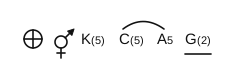
Answer
NTA's official answer key for AIPMT 2015 is not in hand yet. This page will carry the answer when it is; we do not put an answer of our own in its place.
Answer
NTA's official answer key for AIPMT 2015 is not in hand yet. This page will carry the answer when it is; we do not put an answer of our own in its place.
Answer
NTA's official answer key for AIPMT 2015 is not in hand yet. This page will carry the answer when it is; we do not put an answer of our own in its place.
AIPMT 2014
Answer
NTA's official answer key for AIPMT 2014 is not in hand yet. This page will carry the answer when it is; we do not put an answer of our own in its place.
Answer
NTA's official answer key for AIPMT 2014 is not in hand yet. This page will carry the answer when it is; we do not put an answer of our own in its place.
Answer
NTA's official answer key for AIPMT 2014 is not in hand yet. This page will carry the answer when it is; we do not put an answer of our own in its place.
Answer
NTA's official answer key for AIPMT 2014 is not in hand yet. This page will carry the answer when it is; we do not put an answer of our own in its place.
Answer
NTA's official answer key for AIPMT 2014 is not in hand yet. This page will carry the answer when it is; we do not put an answer of our own in its place.